

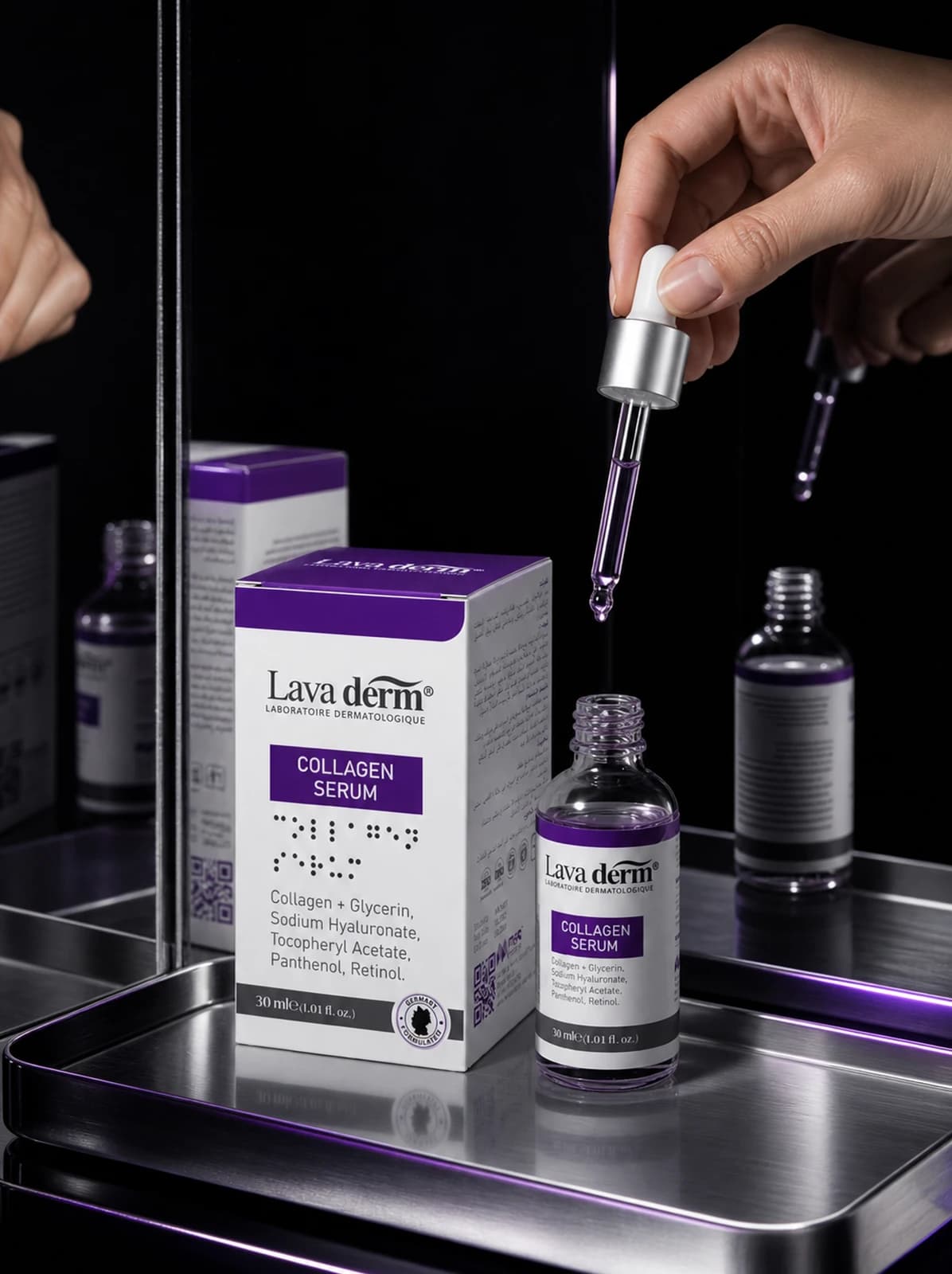
- Best for
- Choosing care for flat marks or assessment for texture
- Routine place
- Tone care after cleansing; sunscreen last before makeup
- Frequency
- Lightener at night, or morning and evening for tolerant skin; sunscreen every morning
- Keep in mind
- Persistent redness or changing texture: ask a pharmacist or dermatologist
Acne marks vs acne scars: flat brown marks can suit Lava Derm Vitamin C + E Lightener; choose Lava Derm Kojic Acid + Vitamin C Lightener if you want the formula labeled fragrance-free with squalane. Flat red marks: gentle care and daily sunscreen, Lava Derm Acne Fluid SPF 50+ if your skin is oily or blemish-prone. Dents or raised scars need a dermatologist rather than a cosmetic tone cream; color and scars can share the same spot.
Key points
- Brown marks after a blemish can fade by themselves in 6 to 12 months once the cause stops (AAD, darker skin tones); deep color can take years.
- Acne scars are usually permanent but can improve with time or treatment (DermNet).
- Sunscreen every morning matters: sunlight can darken pigment left after inflammation.
- Start the C + E lightener every other evening if your skin is sensitive.
Acne marks vs acne scars: what has changed?
A flat brown mark involves extra melanin, the pigment that gives skin its color. A flat pink or red patch may involve changes in small blood vessels after inflammation.
Structural scars change the supporting tissue beneath the surface. Too little collagen, a protein that supports skin, can leave a depression; excess scar tissue can create a raised area. The table gives starting clues. Lighting and phone cameras can make home judgments uncertain.
| What you notice | Next step | Possible concern |
|---|---|---|
| Flat brown or gray-brown patch | Lava Derm Vitamin C + E Lightener; labeled fragrance-free option in the comparison below | Extra pigment after inflammation |
| Flat pink, red or red-purple patch | Gentle care and daily sunscreen; see a pharmacist if redness lasts | Redness after inflammation |
| A dent or pit | Dermatologist assessment of depth and shape | An indented scar |
| Raised or thickened tissue | Dermatologist assessment, especially if growing, itchy or painful | A raised scar |
| Color over a dent or raised area | Discuss both goals; improvement in color can leave texture visible | Mixed color and structural changes |
Choose a Lava Derm cream for flat brown marks
Lava Derm has three lighteners, and all three contain kojic acid and vitamin C. They help the look of dark spots and post-blemish marks become more even over time. The arbutin blend adds exfoliating acids for a smoother-looking surface. Choose by the differences below, not by treating the names as a strength ranking.
If you know an ingredient causes you a reaction, read the full ingredient list on the carton before you buy.
| Choose when you want | Product | Formula extras |
|---|---|---|
| Vitamin C + E with moisturizing ingredients | Lava Derm Vitamin C + E Lightener | Vitamin E, glycerin and panthenol, a moisturizer (provitamin B5) |
| A formula labeled fragrance-free with squalane | Lava Derm Kojic Acid + Vitamin C Lightener | Squalane, a light oil-like moisturizer; labeled fragrance-free |
| Tone care plus surface exfoliation; introduce gradually | Lava Derm Arbutin + Kojic Acid Lightener | Arbutin, kojic acid, vitamin C, glycolic, salicylic and citric acids |
How long can marks take to fade?
Fading depends on the type of color change and whether its cause has stopped. Continuing breakouts or irritation can create fresh marks while older ones improve. Distinguish older areas from fresh marks when discussing progress.
The timeline gives AAD guidance for darker skin tones, not results from a Lava Derm trial. These fading ranges apply to color, not scar texture.
Fading guidance by concern
- 6-12 months
A few shades darker
AAD guidance for darker skin tones: a spot a few shades darker than your natural skin color usually fades by itself within 6 to 12 months once its cause is found and stopped.
- Can take years
Deeper pigmentation
AAD says fading can take years when the color lies deep. That deeper color is often slate blue to gray, or brown much darker than the person's own skin. Color is still only a clue, not a home diagnosis.
- Separate from fading
Dents and raised scars
The color timeline does not apply. DermNet: acne scars are usually permanent, though they may soften. A tone cream does not rebuild a dent.
How long post-acne marks lasted in a clinic survey
- of 262 acne patients at Middle East clinics had post-acne dark marks
- 87.2%
- of respondents said those marks had lasted a year or longer
- 52.6%
Why sunscreen belongs beside tone care
Sunlight can darken pigment left after inflammation. Daily broad-spectrum sunscreen, meaning UVA and UVB protection, belongs beside tone care, together with shade and protective clothing. A lightener provides a different skincare step and cannot supply the UV protection shown on a sunscreen label.
For blemish-prone, oily or combination skin, choose Lava Derm Acne Fluid SPF 50+: an oil-free, non-tinted fluid with SPF 50+ PA+++. For dry or sensitive skin that likes a creamy, tinted finish, choose Lava Derm Physical Sunblock Cream (titanium dioxide and zinc oxide, SPF 50+ PA+++, contains sesame seed oil).
PA+++ is the UVA grade on the sunscreen label. On its darker-skin dark-spot page, AAD recommends a tinted sunscreen that lists iron oxide, for visible light. Look for iron oxide on the package rather than judging by tint. Immediate coverage can soften the look of a mark while the cream is on; that is different from the underlying color fading.
A gentle morning and evening routine
Cleanse and dry the face before applying the lightener. Follow each product’s amount and timing below.
Use the right amount at each stage
Cleanse: morning and evening
Splash the face with lukewarm water. Dispense a small amount into your palms and work it into a soft lather. Massage over the damp face and neck in gentle circles, rinse thoroughly, and pat dry with a clean towel.
Focus: night
Start every other evening, then increase if comfortable. At night, or both morning and evening for tolerant skin, apply a pea-sized amount to areas with uneven tone. Massage gently until absorbed.
Protect: morning
Cleanse and dry the face and neck. Shake gently, then spread a generous, even layer 15 minutes before sun exposure. Pat lightly until fully absorbed and let the film set before applying makeup.
Reapply
Reapply every 2 hours, and after swimming, sweating or towel-drying.
Habits that keep care gentle
Irritation can add to a color concern rather than improve it. Stop a cosmetic that burns or stings, and ask a pharmacist or doctor if symptoms persist or are significant.
Home needling can pierce the skin and lead to infection, scarring, or a change in color. Strong peels belong in a clinic. They can also change color or leave a scar. A video is not a reason to do either at home.
Do
- Patch test: try a small area before first facial use.
- Take your prescription routine to a pharmacist before adding a lightener.
Avoid
- Picking, squeezing or aggressively scrubbing marks and blemishes.
- Starting a peel, a vitamin A ingredient such as retinol or a prescription retinoid, and a lightener together.
- Mixing steroid medicines into facial mark care without professional advice.
Four myths about marks and scars
Each of these can lead you to buy the wrong product or delay a visit you need.
- “Every red mark must turn brown.” Redness and extra pigment are different changes. They can coexist; brown is not a required next stage for a red mark.
- “The arbutin cream fills pits because it smooths texture.” Its exfoliating acids act on dull surface cells. Smoother-looking surface skin does not mean rebuilding the supporting tissue beneath a deep scar.
- “Fragrance-free means irritation-free.” It tells you about fragrance, not how every ingredient will feel on your skin. Check your own response rather than using the claim as a safety guarantee.
- “Every cream is useless for every scar.” Dermatologists can sometimes offer medicines applied to the skin for mild scarring. That is a separate medical decision, and cosmetic tone creams are not a way to rebuild deep pits.
When texture or symptoms need professional advice
For dents, a dermatologist assesses the shape and depth, your skin tone, previous procedures and whether new inflammation is still creating scars. Narrow, deep pits, depressions with a clear edge and broad rolling scars may need different approaches.
A consultation may cover resurfacing, a procedure that smooths the surface, or microneedling, a clinic treatment with many tiny needles. The dermatologist may also discuss procedures for individual scars, releasing a scar from underlying tissue or fillers. Ask what visible change is realistic, how your skin tone affects pigment risk, what recovery involves and what aftercare you will need.
A simple Lava Derm tone-care routine
A short reminder of the daily flow. The focus step is optional.
- 01
Cleanse
Lukewarm water, small amount, pat dry. Morning and evening.
Lava Derm Dermo Wash - 02
Focus (optional)
A pea-sized amount on areas with uneven tone, at night.
Lava Derm Vitamin C + E Lightener - 03
Protect
Generous, even layer 15 minutes before sun, every morning.
Lava Derm Acne Fluid SPF 50+
Questions, answered clearly
Why might vitamin C seem to do nothing for my marks?
Vitamin C and kojic acid are made for brown color. They are not meant for redness or dents, so a red mark or a pit may look unchanged. Check which kind of mark you have in the table above.
What do I tell the dermatologist if I have both a brown mark and a dent?
Point to both changes and explain which bothers you most. Agree whether the goals are a less visible brown patch, a smoother depression or both.
How long should I wait before asking about persistent marks?
Do not wait if the cause is unclear, new marks keep appearing or the concern affects your confidence. Tell the professional when the original blemish settled and what has changed since then.
Are fillers a permanent answer for pits?
Most fillers are temporary and last from 3 to 24 months; some are permanent. Ask the dermatologist which one is proposed, its risks and how often it needs repeating. Touch-ups may still be needed with a permanent filler, including as skin ages.
Can I use a lightener in the morning?
Yes, if your skin tolerates it: the pack allows night use, or morning and evening for tolerant skin. Follow with sunscreen every morning.
Which of the three lighteners should I pick for acne marks?
For brown marks, choose by formula preference rather than a stronger-sounding name. The acid-blend cream adds exfoliation, so avoid stacking it with a peel or retinol. For lasting redness or texture changes, ask a pharmacist or dermatologist which care fits the cause.