
- Best for
- Anyone building a reliable daily face-and-neck sunscreen habit
- Routine place
- The final morning skincare step, before makeup
- Frequency
- Every morning; reapply during continued outdoor exposure
- Keep in mind
- Sunscreen works with shade and protective clothing, not instead of them
Use a broad-spectrum, water-resistant sunscreen with SPF 30 or higher as the final step of your morning skincare. Apply it generously to exposed skin and reapply during outdoor exposure, especially after swimming, sweating, or towel-drying.
Key points
- Look for broad-spectrum protection, SPF 30 or higher, and water resistance.
- Apply sunscreen after skincare and before makeup, covering commonly missed areas.
- Reapply at least every two hours outdoors and after water, sweat, or towel-drying.
What SPF does—and does not—tell you
SPF describes protection from the UVB rays that mainly cause sunburn. It does not tell the whole protection story, which is why the words “broad spectrum” matter: they indicate protection across both UVA and UVB radiation.
A higher SPF does not create an all-day shield. The protection on the label depends on applying enough product, covering evenly, and renewing that layer when exposure continues.
How to apply sunscreen in a real routine
Complete your cleanser, treatment, and moisturizer first. Sunscreen comes last in skincare, before makeup. Give yourself enough time to spread it evenly rather than treating it as a quick final swipe.
Cover the face, ears, neck, hairline, and any exposed chest. For the body, remember hands, feet, shoulders, and the backs of the legs when they are uncovered.
- Use an even, generous layer rather than relying on a trace amount.
- Choose a texture you are comfortable applying every day.
- Use shade, clothing, a hat, and sunglasses as part of the same protection plan.
Reapplication is part of the first application
If you remain outdoors, plan to reapply at least every two hours. Reapply sooner after swimming, heavy sweating, or towel-drying, even when the label says water resistant.
For an ordinary day mostly indoors, the right schedule depends on how much direct daylight reaches you and whether the original layer has been rubbed or washed away. The practical goal is to maintain complete coverage during meaningful exposure.
The best sunscreen is one you will use properly
Oily or blemish-prone skin may prefer a lightweight, non-comedogenic fluid. Dry skin may feel better with a more moisturizing cream. Visible cast, eye-area comfort, fragrance sensitivity, and how the product sits under makeup can all affect whether daily use feels realistic.
If sunscreen repeatedly burns, causes a rash, or is difficult to tolerate alongside acne or prescription treatment, ask a dermatologist for help choosing an appropriate option.
A simple Lava Derm sun routine
Keep the layers beneath sunscreen comfortable and uncomplicated so it is easier to apply an even final layer.
- 01
Cleanse
Begin with a gentle wash when cleansing is needed.
Lava Derm Dermo Wash - 02
Focus (optional)
Use one familiar serum only if it already has a clear purpose in your routine.
- 03
Seal (optional)
Add a light moisturizer where skin feels dry; skip an extra layer if your sunscreen is already comfortable.
Lava Derm Re-Moist - 04
Protect
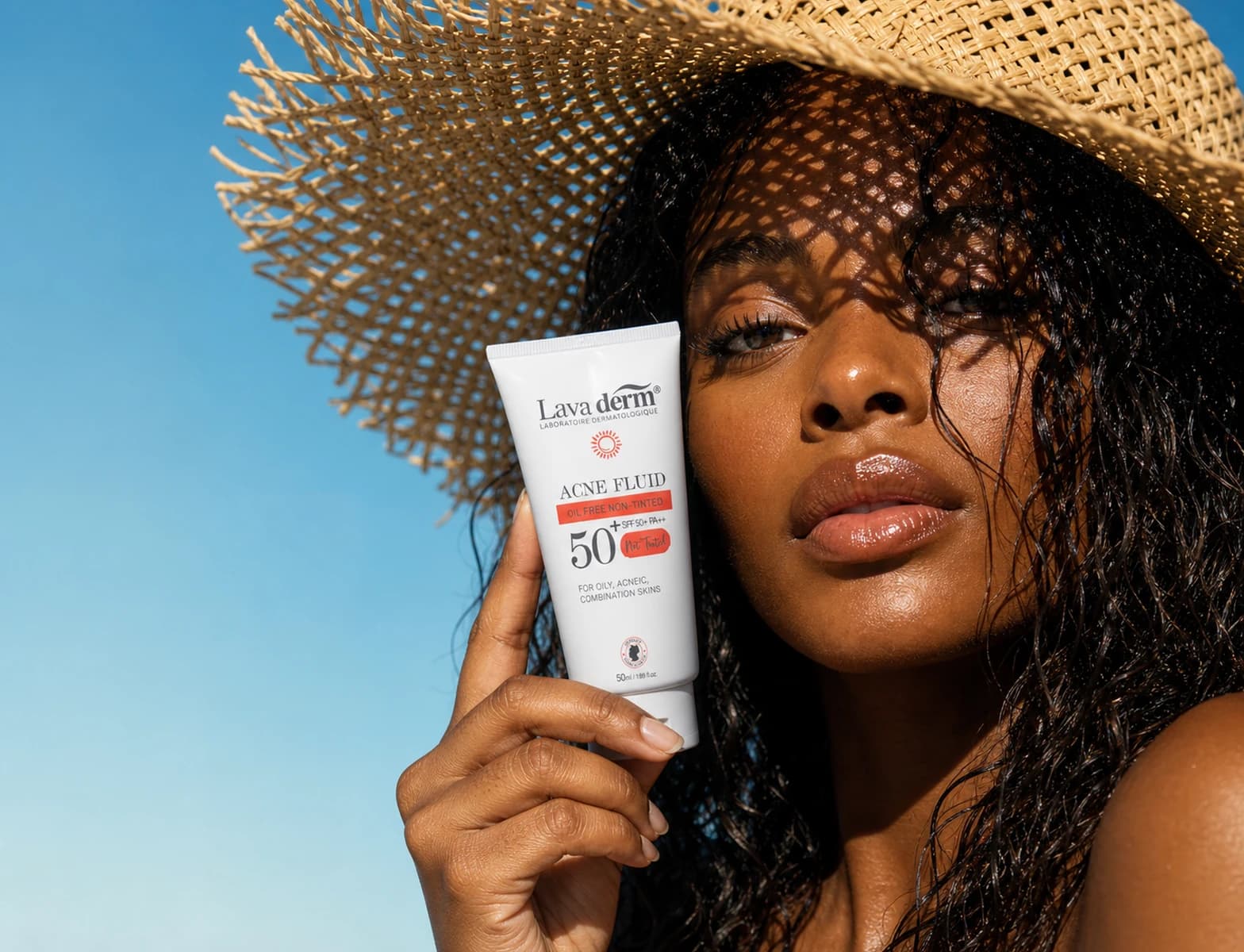
Choose the Lava Derm SPF 50+ texture you can apply generously and renew during exposure.
Compare Lava Derm sun protection
Questions, answered clearly
Is SPF 50 enough for the whole day?
No sunscreen is an all-day application during ongoing exposure. SPF 50 still needs generous application and regular reapplication outdoors.
Does makeup with SPF replace sunscreen?
Makeup can add protection, but it is difficult to apply most makeup in the amount needed for dependable, even sunscreen coverage. Use a dedicated sunscreen underneath.
Do I need sunscreen on cloudy days?
UV radiation can still reach the skin when the sky is cloudy. Daily protection is a useful habit whenever exposed skin will receive daylight.