
- Best for
- Dry, tight, flaky, or rough-feeling body skin
- Routine place
- Immediately after bathing and whenever dryness returns
- Frequency
- Daily moisture; focused rough-area care only as directed
- Keep in mind
- Cracking, bleeding, infection, reduced foot sensation, or widespread itch needs professional advice
Keep showers short and warm rather than hot, cleanse gently, and apply moisturizer while the skin is still slightly damp. Use a richer or more focused product on rough areas, but seek professional advice for cracking, bleeding, infection, or persistent widespread itch.
Key points
- Shorter warm showers are kinder to dry skin than long hot ones.
- Moisturize promptly after bathing and again whenever skin feels dry.
- Treat rough local areas differently from the whole body and avoid aggressive filing or scrubbing.
Begin with the shower, not the lotion
Long, hot showers and vigorous towel rubbing can leave dry skin feeling tighter. Use warm water, keep bathing brief, and pat rather than rub when drying.
A cleanser does not need to create a dense lather to work. Focus gentle cleansing where it is needed and avoid repeatedly scrubbing already dry areas.
Moisturize while skin is slightly damp
Applying moisturizer soon after bathing helps trap some of the water left at the skin surface. Use enough to cover comfortably and repeat on hands or other areas that are washed frequently.
Lotions tend to feel lighter. Creams and ointments usually provide a richer layer for very dry areas. Fragrance-free options are a useful starting point when skin is reactive.
Give rough areas focused care
Elbows, knees, heels, and other thickened areas may need a richer moisturizer or a formula designed to soften rough surface skin. Apply only as directed and avoid open cracks or actively inflamed skin.
Do not cut calluses or use aggressive tools. People with diabetes, poor circulation, or reduced sensation should ask a clinician before treating foot calluses themselves.
Know when body dryness is not just cosmetic
Seek advice if dryness becomes painful, cracked, bleeding, oozing, or persistently itchy, or if anything applied causes burning. A skin condition or another health issue may need a different plan than ordinary cosmetic moisture care.
Build a Lava Derm body routine
Use an everyday moisturizer broadly and reserve stronger rough-skin formats for the areas and frequency described on their labels.
- 01
Cleanse
Keep showers brief and warm, cleanse gently, then pat rather than rub.
- 02
Focus (optional)
Use a urea format only on the dry or rough areas it is designed for.
Compare Lava Derm urea care - 03
Seal
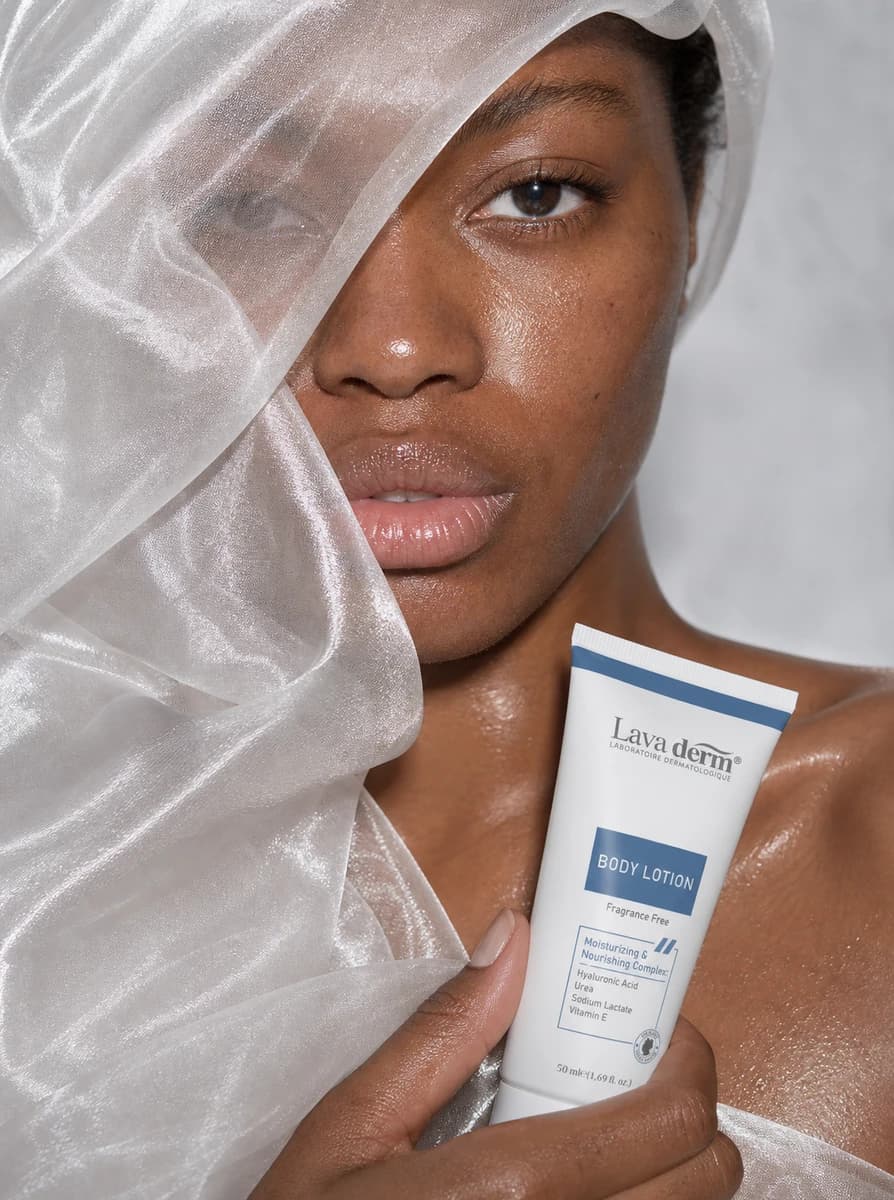
Massage lotion into slightly damp arms, legs, elbows, and knees.
Lava Derm Body Lotion - 04
Protect
Apply sunscreen to body skin that clothing will not cover.
Compare Lava Derm sun protection
Questions, answered clearly
When is the best time to apply body lotion?
Apply it soon after bathing while the skin is still slightly damp, then reapply whenever the skin feels dry.
Is lotion or cream better for dry body skin?
Lotions feel lighter, while creams and ointments generally provide a richer layer. Choose according to dryness, climate, and comfort.
Why does moisturizer sting very dry skin?
Cracked or inflamed skin can sting with products. Stop products that cause persistent burning and ask a dermatologist if the discomfort continues.